
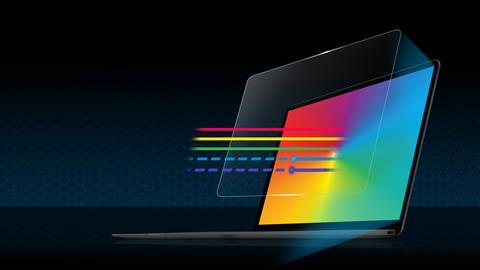
Eyesafe, the American-based supplier of blue light protection solutions, has published a communication article on its website comparing the benefits of blue light glasses with those of its own blue light filters. Contrary to eyeglass lenses that block blue light near the eye, Eyesafe’s products aim at blocking it directly at the level of the digital screens.
The company, on which we started to report last year, is developing built-in blue light filtering solutions with major consumer electronics companies such as LG, Acer, HP Lenovo or Dell while collaborating with healthcare organizations like the American Optometric Association and Prevent Blindness. Eyesafe also launched last spring its own direct-to-consumer brand of blue light filters but the company said its primary sales distribution was B2B to corporations, government, and school districts.
Eyesafe blue light filters retail from $39.99 for smartphones and from $69.99 with free delivery in the U.S. on the company’s website.
The article, which unsurprisingly stresses the higher benefits of Eyesafe’s products, seems to indicate that the group intend to gain market share on the booming blue light protection market by positioning its products as an alternative to eyeglasses. However, a spoke person for the company also told us that there may be benefits in layering protection from glasses and filters, adding that Eyesafe was primarily competing with other filters’ suppliers and that it may collaborate with eyewear or lens companies and AR/VR manufacturers in the future.
As reported at the end of last month, the company started to partner with health insurances in the U.S., offering discounts on Eyesafe filters to their clients.
The main point highlighted by the brand is the current lack of regulation and transparency in the blue light glasses’ market, which results in a large scope of blue light filtration performances, with some glasses providing little-or-no protection despite their claim, the company said.
Eyesafe explained that it tested eight different pairs of blue light glasses to test transmittance and absorbance of blue light in the 380-780 nanometers range. Sampled products only included glasses fitted with plano lenses, with half of them below the $10 price point, but also glasses with blue light lens treatments at between $100 and $160 per pair. According to the company, most of the tested products missed the mark and the ones that actually delivered on the blue light filtering promise came out with a yellow color cast, while its filters maintain true colors.
Another important point in the company’s comparison is that, contrary to blue light glasses that need to be put on to operate, which can be challenging for kids, blue light filters provide an always-on protection as they are directly affixed on the screens. Eyesafe also stressed the fact that the performance of its products are tested and validated by a third-party laboratory.
While the negative impact of blue light on sleep cycles has been demonstrated, its actual damage on eye health remains a debated issue. According to the American Academy of Ophtalmology, “there is no scientific evidence that blue light from digital devices causes damage to your eye”.